SEED 2.0 Impact Approach & Snapshot
At SEED Care and Support Foundation, our impact is defined by real outcomes in education systems — where evidence leads to decisions, decisions lead to improved practice, and practice leads to sustained improvements in access, quality, and equity.
System Reach & Engagement
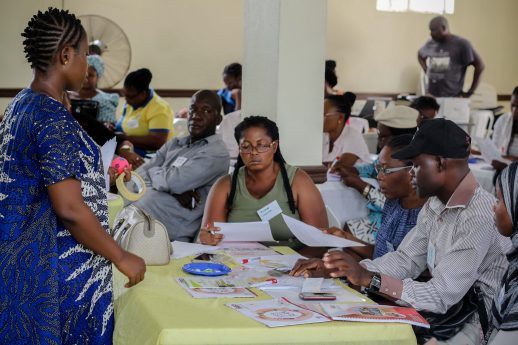
Through our work in research, influence, and strengthening, SEED has engaged multiple levels of the Nigerian education ecosystem. These engagements have created pathways for evidence to be heard, considered, and acted upon in policy spaces across multiple levels of governance.
📌 Federal Policy Processes
- Contributed to the development and launch of the first ever National Policy on Non-State Schools in Nigeria (NPNSN)
- Further engagement with federal stakeholders on implementation pathways, including Education Public‑Private Partnerships (E-PPP) and Accelerated Teacher Professionalisation Pathways (ATPP).
📌 Sub-National (State) Reforms
📌 Coalitions & Networks
- Convened and now the Secretariat to the Coalition of Low-Fee Private School Associations in Lagos with over 6,600 schools, serving more than 330,000 children and employing over 46,000 school leaders, teaching & non-teaching staff.
📌 21 Local Government Areas (in Lagos & Ogun States)
- Enabling local system actors and associations to engage with government, evidence, and reform dialogues
Evidence-Driven Outcomes
We measure impact in terms of policy uptake, institutional capacity gains, and system learning:
📌 Policy Engagements Influenced
📌 Institutional Capacity Strengthened
📌 Practice Changes at School Level
Why This Matters for Systems
SEED’s impact goes beyond projects. It influences how decisions are made, how systems learn, and how institutions improve. We define success not by outputs alone, but by sustained improvements in policy, practice, and institutional capacity.
At the pilot phase of SEED (as a social impact project) which ran from 2016 – 2019, the following impact results were achieved:
| | 2017 | 2018 |
|---|
| SCALE: Number of Schools Served (Direct) | 51 | 664 |
| SCALE: Number of Pupils (Indirect) | 6,317 | 58,853 |
| SCALE: Teaching & Non-Teaching Staff (Indirect) | 514 | 5,472 |
| IMPACT: % of Schools Recording SQAT Quality Improvement | n/a* | 100% |
| IMPACT: Average SQAT Quality Improvement Points | n/a* | 28** |
*Impact not measured during this period.
**28 SQAT points (three months post-intervention) from independent evaluation by Developing Effective Private Education (DEEPEN) Challenge Fund (a UKaid-funded project) managed by Adam Smith International. The Report of results of three months post-intervention from the project activities funded by the Challenge Fund for 622 low-cost private schools in Lagos, Nigeria were presented during the Close Out Event & Innovation Fair which held on the 28th March, 2018 at the Sheraton Hotel, Lagos, Nigeria. Click the link to download the EXCEPT from the DEEPEN Challenge Fund Project Closure Report – March 2018.
***Six months post-intervention, SEED recorded 103.77 SQAT points from internal M&E assessment using the same sample with the DEEPEN Challenge Fund midline evaluation. However, we recorded 116.6 SQAT points from internal M&E assessment six months post-intervention for all schools evaluated.